Count the courses before you count the plates. For a wedding with a separately served starter, main course and dessert, each guest needs three food plates if every course uses a fresh plate. Chargers are an optional fourth piece. Glassware and cutlery depend on the drinks and menu, so a “complete setting” is different for every reception.
A wedding rental quantity chart for 50, 100 and 150 guests
This starting example assumes a plated starter, main course and dessert; water and one wine glass at each seat; and a separate fork for starter, dinner and dessert. It excludes spares, vendor meals, children’s variations, bar glasses and coffee service. Remove anything your venue or caterer supplies before requesting rentals.
| Piece | 50 guests | 100 guests | 150 guests |
|---|---|---|---|
| Dinner plates | 50 | 100 | 150 |
| Starter plates | 50 | 100 | 150 |
| Dessert plates | 50 | 100 | 150 |
| Total food plates | 150 | 300 | 450 |
| Chargers, if used | 50 | 100 | 150 |
| Water glasses | 50 | 100 | 150 |
| Wine glasses, one type | 50 | 100 | 150 |
| Dinner forks | 50 | 100 | 150 |
| Starter forks | 50 | 100 | 150 |
| Dessert forks OR spoons | 50 | 100 | 150 |
| Dinner knives | 50 | 100 | 150 |
| Napkins | 50 | 100 | 150 |
Example: 100 guests means 300 food plates in this menu, not 100. If starter and dessert both use an 8-inch plate, order 200 of that size, plus 100 dinner plates. Each guest still has only one napkin unless your service plan calls for a change.
Plated dinner: count every course that needs a fresh piece
Write the menu in service order. A separately plated salad needs its own plate and fork; soup needs a suitable bowl and spoon instead. Add a bread plate and butter knife only if that is how bread will be served. A shared bread basket does not automatically mean each guest needs a bread plate.
For dessert, ask whether the caterer needs a fork, spoon or both. A cake fork and a spoon for a soft dessert are different requirements. Do not assume guests will save their dinner forks for later: clearing staff may already have removed them.
Buffet: allow for a second trip without guessing
A buffet is not necessarily a one-plate meal. Guests may return for another serving, and the caterer may require a fresh plate each time. Ask how many trips the menu and service format are expected to produce, then add dessert plates separately.
For a worked planning example, 100 guests taking one first plate each, with 30 guests taking a fresh second plate, require 130 buffet plates. Add 100 dessert plates if everyone receives dessert. That is 230 food plates before spares. The 30 second visits are an assumption for this example, not a universal buffet allowance.
If there is on-site washing, confirm the equipment, staffing and turnaround. Reusing a washed plate works only if clean pieces return before the next service needs them; a venue dishwasher alone is not a washing plan.
Glassware: separate the table from the bar
The chart allows one water glass and one wine glass per guest. If red and white wine are poured in separate glasses, add a second wine glass. A separate toast requires flutes or coupes only if the toast is not made with guests’ existing drinks.
Bar orders need their own calculation. Ask the bartender to estimate glasses by drink type, expected servings, replacement frequency and washing capacity. One cocktail glass per guest may be too few over a long reception; adding every drink served may be too many if staff wash and reuse glasses.
How many spare pieces should you rent?
Ask the caterer for a reserve by item rather than applying a percentage to everything. For arithmetic only, a 5% reserve on 100 dinner plates adds five, making 105. It does not determine whether five is enough for your service. Confirm extra guests, dropped pieces, staff meals and packing multiples, and avoid counting the same reserve twice.
The Plate Company has a 25-piece minimum for each selected plate or glass set or collection. Mixing collections does not combine their minimums. Tell us the intended pieces and quantities so we can confirm the order against your date and selection. See our rental FAQ for current arrangements.
What to confirm with your caterer before ordering
- Final guest count, children’s menus and vendor meals.
- Every course, serving style and the plate or bowl needed for it.
- Fresh cutlery between courses and dessert utensils.
- Included venue pieces, including their sizes and quantities.
- Water, wine, toast, cocktail and coffee service as separate requirements.
- Spares, packing quantities and any staffed washing plan.
- Who sets the tables, clears each course, scrapes plates and repacks the order.
- Delivery access, loading windows, stairs, elevators and the venue’s collection deadline.
Printable wedding tableware checklist
Event date: __________________ Venue: __________________
Guests: ______ Children: ______ Vendor meals: ______
For each line, record: required quantity − venue/caterer supply + agreed reserve = rental order.
- □ Starter plates / bowls __________________
- □ Dinner / buffet plates __________________
- □ Dessert plates __________________
- □ Bread plates / chargers, if used __________________
- □ Starter forks / dinner forks / knives __________________
- □ Dessert utensils / soup spoons / butter knives __________________
- □ Water / wine / toast glasses __________________
- □ Bar glassware / coffee cups and saucers __________________
- □ Napkins __________________
- □ Confirmed setup, clearing and repacking team __________________
- □ Delivery / pickup / return arrangements __________________
- □ Final quantities approved by caterer __________________
Collection, size and service notes: __________________________________
____________________________________________________________
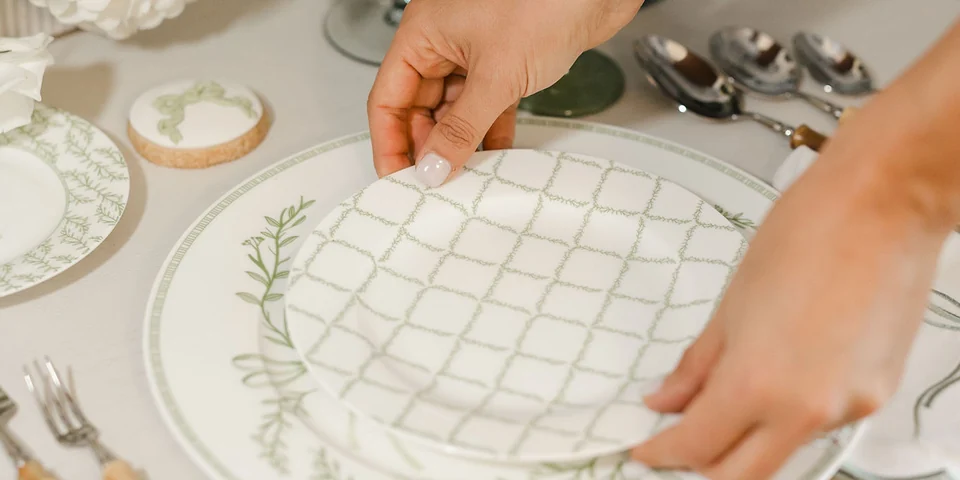
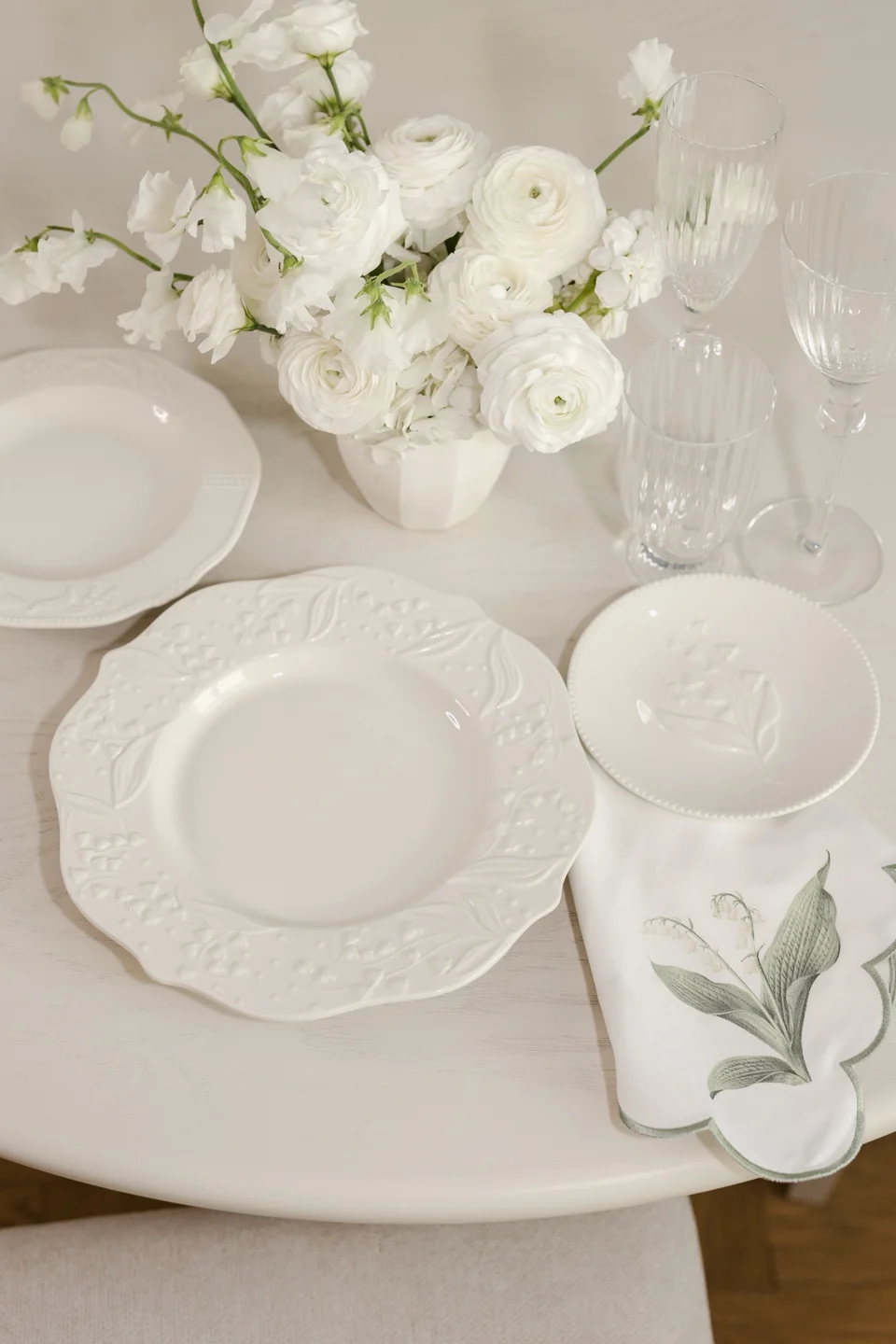
With your quantities agreed, explore our coordinated wedding tableware rentals in Toronto to choose plates and glasses that work together. Use the photographed settings as a styling starting point, then match the individual pieces to your caterer’s service plan.
Turn the checklist into a rental request
Browse dinnerware, glassware, flatware and napkins. Send your date, Toronto or GTA venue, guest count and the agreed quantities. Availability and the final order are confirmed in your quote.
For budgeting, read our Toronto wedding tableware rental cost guide. For the decorative base beneath the food plate, see charger plate vs. dinner plate.
Plan your wedding table